
Stories from the Islands
Their Stories
A DAY-NRLM SUCCESS STORY
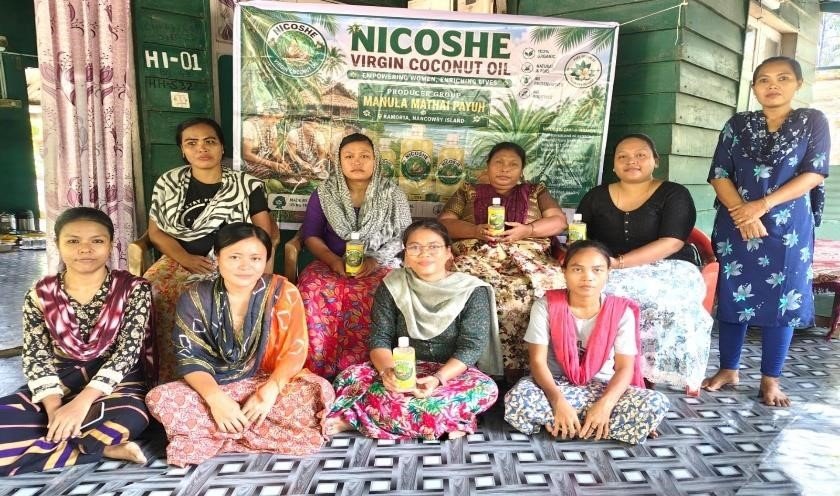
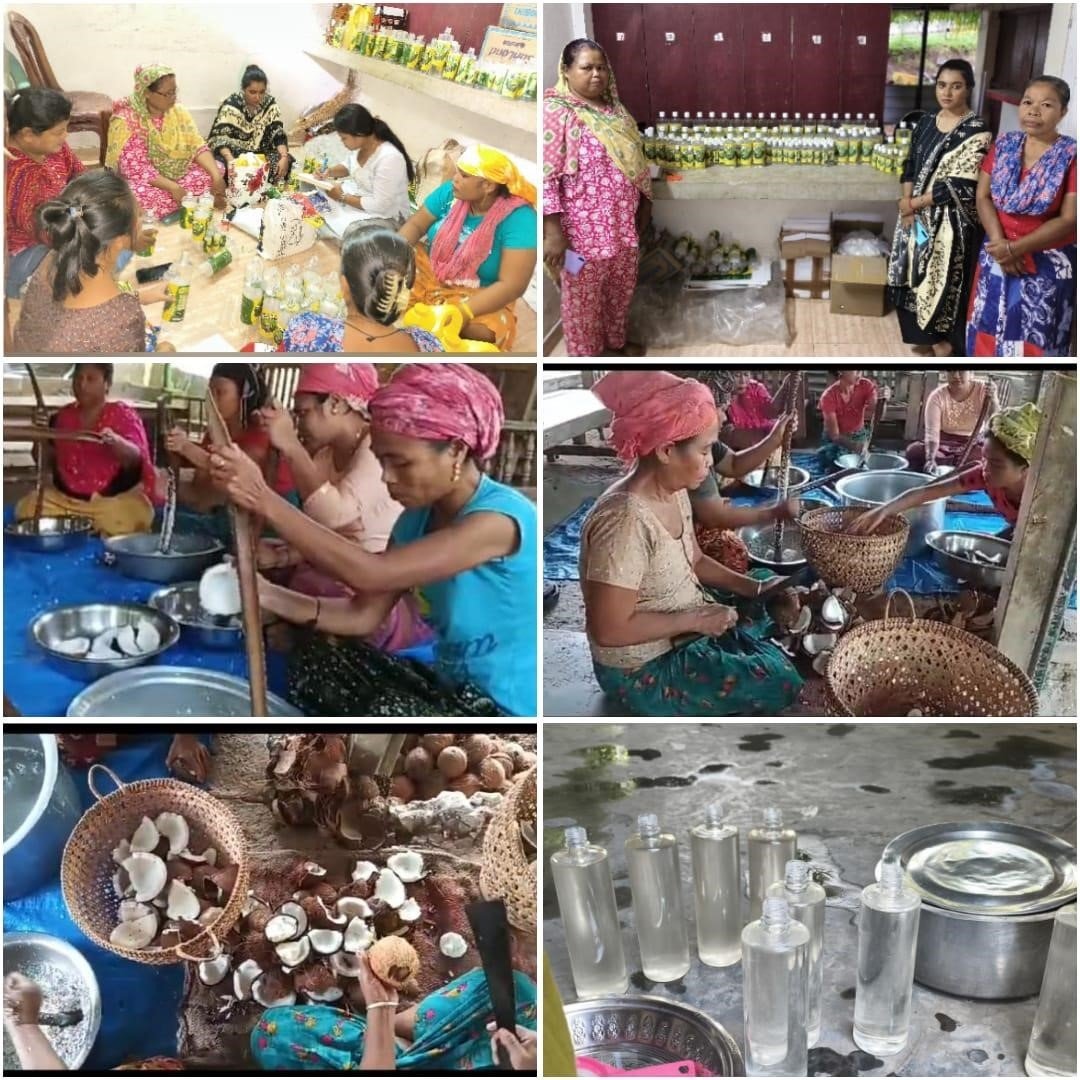
From Tradition to Enterprise: The Women Behind NiCoShe - A Unique SHG Brand of Virgin Coconut Oil.
Long before anyone spoke of brands or business plans, the tribal women of Nancowry Island were already coconut oil makers in their own right. For decades, using methods passed down from their mothers and grandmothers, they had been extracting virgin coconut oil by hand — for their own kitchens, for local use, and occasionally for sale within their own community. It was skilled, patient work, done the way it had always been done, and it never asked for recognition beyond the household. That quiet tradition was about to be noticed far beyond Nancowry.
In January 2025, this ancestral craft reached a milestone - the traditional virgin coconut oil of Nancowry was conferred a Geographical Indication (GI) tag, a recognition facilitated by NABARD with the support of A&N Administration. With that recognition, and with coconuts growing in abundance across Nancowry Island, it became clear that virgin coconut oil could be far more than a household product - it could be the foundation of a genuine, income-generating enterprise for the local tribal women who already held the skill.
During this period, another important aspect of the journey was unfolding at the grassroot level. The tribal community members who were already producing and selling virgin coconut oil locally in village fairs, but the product was being packed with locally available used glass and plastic bottles. Despite the quality and traditional value of the product, the women were earning only a modest ₹150–200 per litre. The absence of standardized packaging and a common identity limited the product’s potential to reach better markets and generate higher returns.
In one of the block-level meetings, the possibility of standardizing the packaging of the product was discussed with SHG members. The tribal SHG women expressed their interest and requested support in procuring suitable packaging bottles. The Block Office, with the support of DAKSHIN Foundation, a local NGO working in the Islands, came forward to facilitate the required packaging support. This became one of the early steps towards transforming a traditionally prepared household product into a more organized and marketable enterprise.
It was also observed that although the virgin coconut oil was being produced using similar traditional practices across different villages and islands within the Block, the product was generally being sold under the name of individual SHGs. There was therefore an opportunity to bring these women together and create a common platform that could give greater strength, identity and bargaining power to their collective effort.
Through a series of discussions, extensive ground-level mobilization and continued interaction with SHG members, the idea of bringing together women from different SHGs, including those located in geographically distant villages, gradually took shape. This collective vision ultimately led to the formation of the Manula Mathai Payuh Producer Group 5 - a platform that brought together SHG women under the DAY-NRLM framework, with a common purpose, collective ownership and an established Bye-Law framework. The brand name of the product was thoughtfully chosen as “NiCoShe” – “Ni” representing the Nicobari community, “Co” for Coconut, and “She” symbolizing/ the collective efforts of women.
The initiative received an honor no one had anticipated. Hon’ble Prime Minister Narendra Modi spoke about it in the 118th episode of Mann Ki Baat, praising the way tribal women were being organized into Self Help Groups to produce coconut oil as a meaningful step toward economic independence. For a group that had been formally registered only days earlier, it was an extraordinary, almost overwhelming, start and a moment of immense pride for everyone in Nancowry.
The national attention that followed Mann Ki Baat prompted the initiative to move quickly and deliberately, scaling up institutional support for the group from expert agencies. The Indian Council of Agricultural Research (ICAR) with the support of District Administration - Nicobars conducted hands-on decentralized training across villages with the support of the Tribal Councils and Village Captains to bring about quality improvement and standardization. Thereafter, the product labelling and brand logo were designed and finalized. Using the revolving funds sanctioned to the SHGs, the labels were printed, giving the product a professional and attractive appearance.
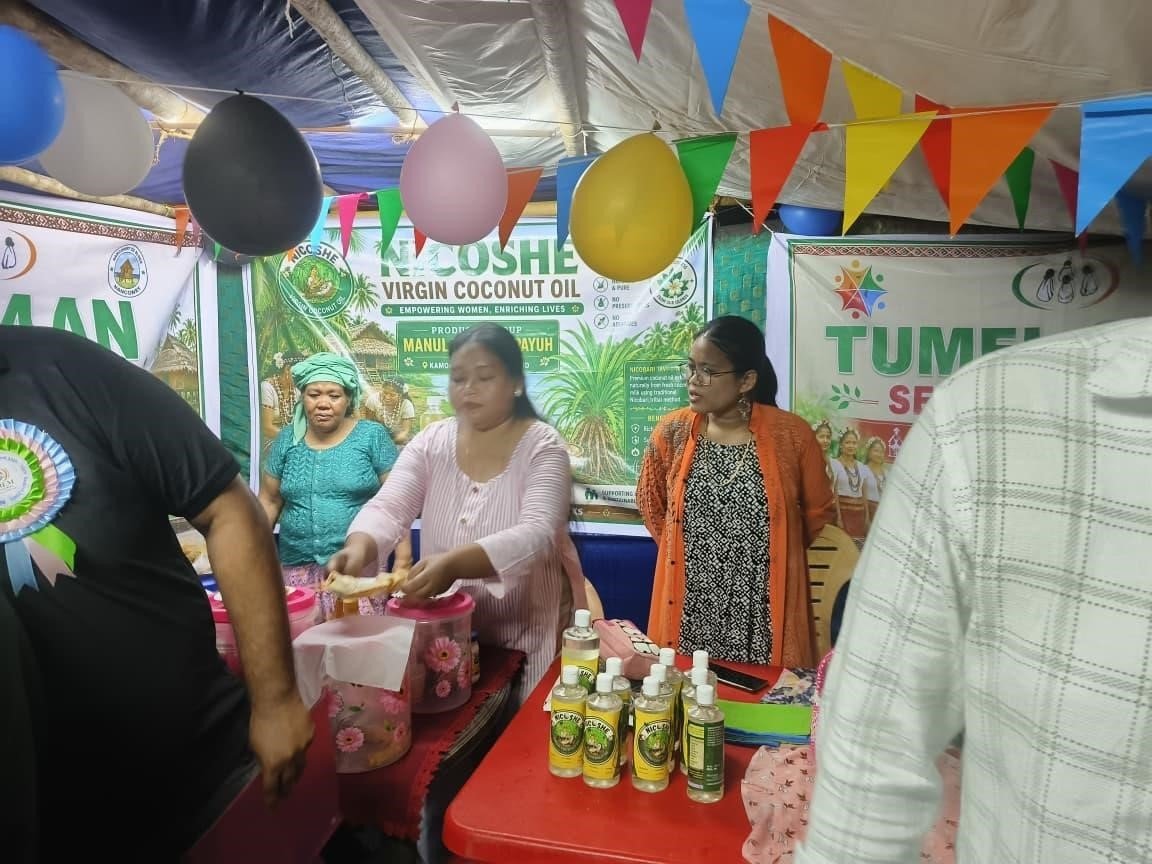
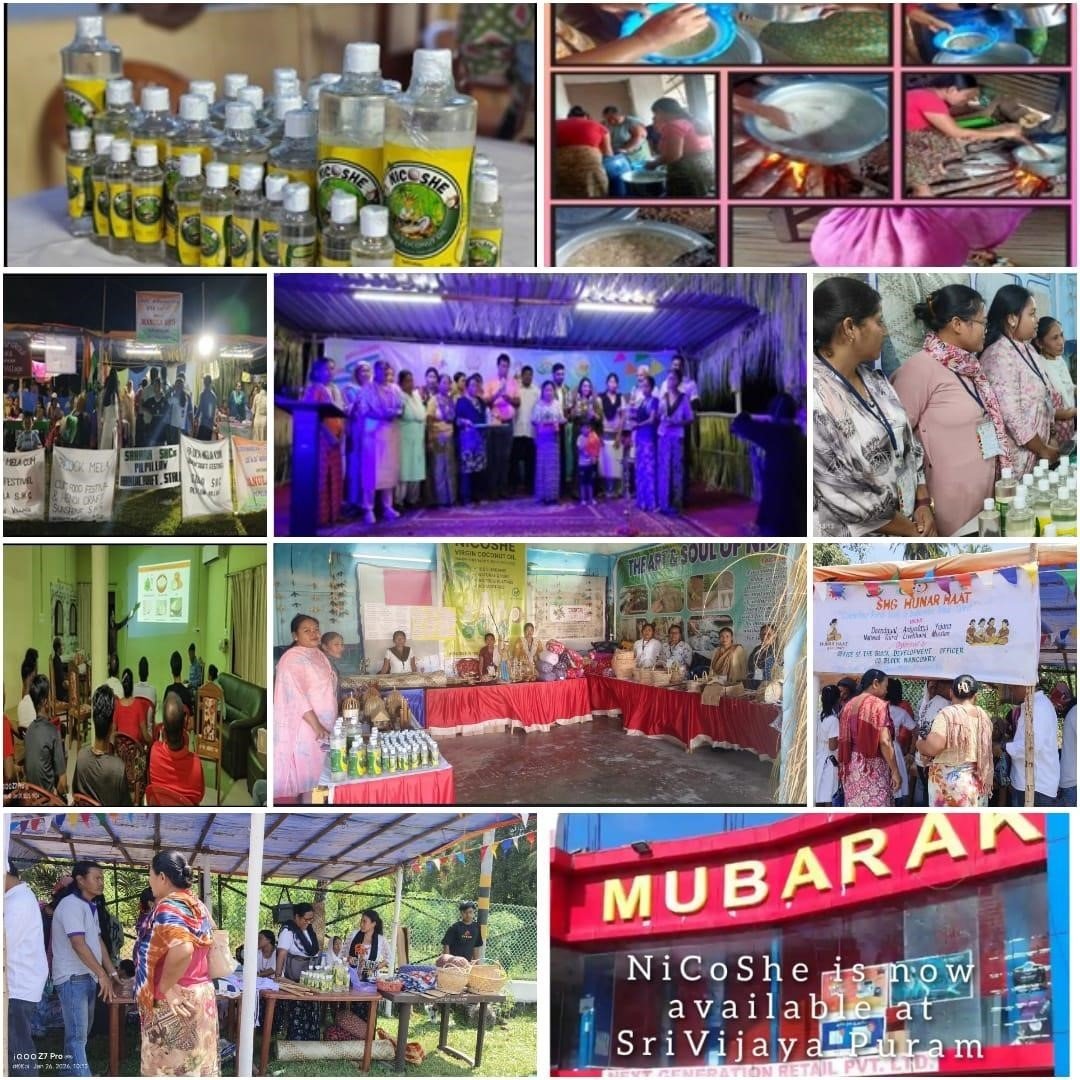
Thus, the unique SHG brand of Virgin Coconut Oil, “NiCoShe,” operated and managed by the Manula Mathai Payuh Producer Group, was formally launched during the two-day Block Mela cum-Tribal Food Festival held on 15th and 16th August 2025 at Nancowry.
In order to establish market linkages, the product was introduced through government emporiums, AVSAR stalls, Sagarika and Samudrika Museum outlets by coordinating with the concerned agencies. The product gained wider visibility during the first-ever SARAS Mela held at ITF Ground, Sri Vijaya Puram. Further, market expansion was achieved by linking the product with retail supermarkets in Sri Vijayapuram.
With steady support, teamwork and collective determination, NiCoShe has carved a distinct identity in the islands and continues to scale greater heights. The product was also recently sourced by the Government of India for a Parliamentary Conference in New Delhi, marking a significant recognition of the brand beyond the islands. Further strengthening this journey, the A&N Administration has committed convergence support of ₹70 lakh in collaboration with the Coconut Development Board, with the assistance of the District Administration, Nicobar, and ICAR-KVK, Car Nicobar, to enhance production, value addition and market reach.
From a modest SHG initiative to a recognised island brand, NiCoShe stands as a testament to what women can achieve when collective effort, institutional support and opportunity come together.
↑ Back to top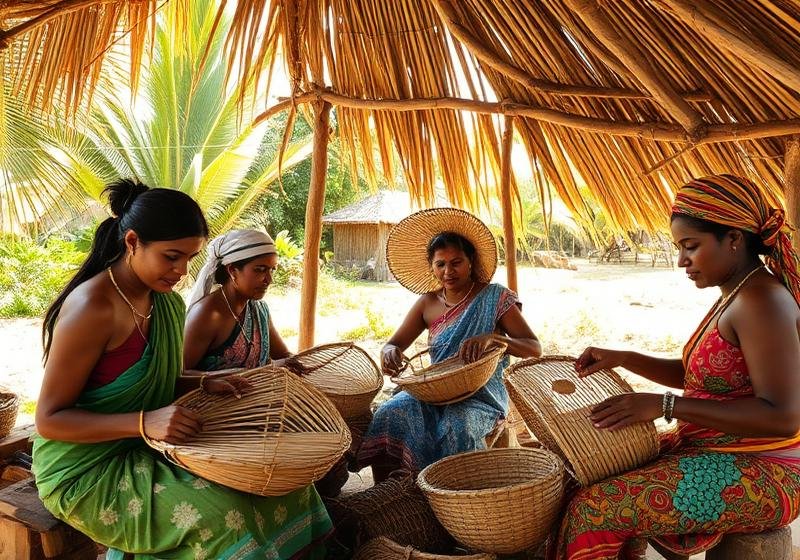
Swayam SHG – North & Middle Andaman
In the lush forests of Mayabunder, the Swayam SHG has turned abundant cane and coconut resources into a sustainable livelihood. The group of ten women weave baskets, trays, and decorative items using age-old techniques passed down through generations.
“We used to sell our items at local markets,” explains Rani, a weaver. “Now, with the online store, we receive orders from mainland India. Our cane products are now known for their durability and beautiful finish.”
The group also trains young girls in the community, ensuring the craft stays alive. They use eco-friendly dyes and natural finishes, making their products a favourite among conscious consumers.
↑ Back to top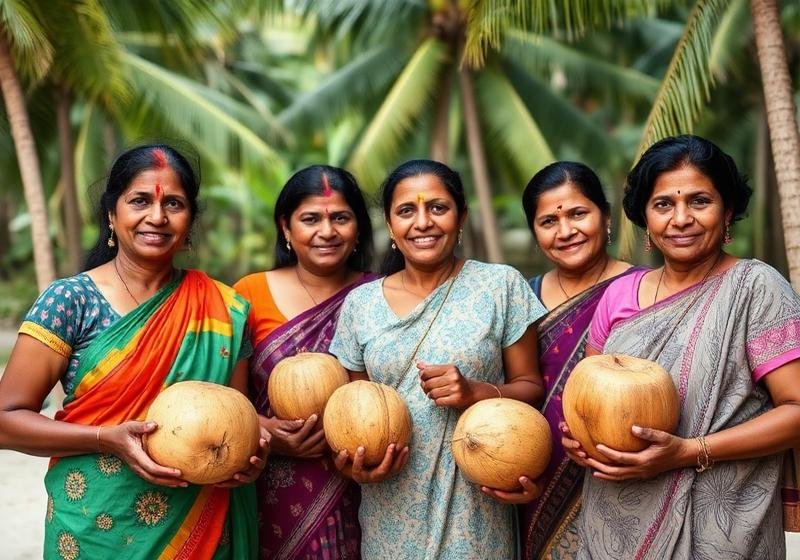
Nicobar SHG – Nicobar Islands
On the shores of the Nicobar Islands, a group of women are reviving the traditional shell and coconut craft that once defined the region’s artistry. The Nicobar SHG works with a zero‑waste philosophy – every part of the coconut is used, from the husk for fibre to the shell for jewellery and home décor.
“We collect shells and coconuts after the tide goes out,” says Mary, a member. “With careful hand carving and polishing, we turn them into beautiful earrings, necklaces and coasters. The proceeds support our families and also fund a small school we run for local children.”
Their products carry the essence of the sea – each piece is unique, shaped by the hand that found it.
↑ Back to top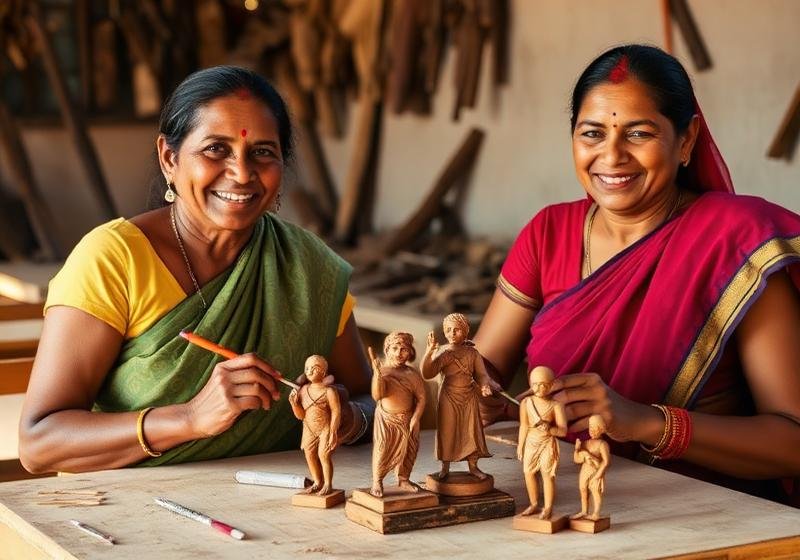
Uday SHG – South Andaman
The Uday SHG is a vibrant collective of painters and handloom weavers who are keeping island motifs alive. Based in South Andaman, they create hand‑painted sarees, dupattas, and wall hangings that feature traditional designs – palm trees, sea waves, and local flowers.
“We learned from our grandmothers,” says Sunita, a painter. “Now we are teaching a younger generation of women. It’s not just about income – it’s about preserving our identity.”
The group uses natural dyes extracted from local plants, and each piece is a labour of love. Their work has been featured in exhibitions across the islands and is now available online.
↑ Back to top